
by Custos Designs
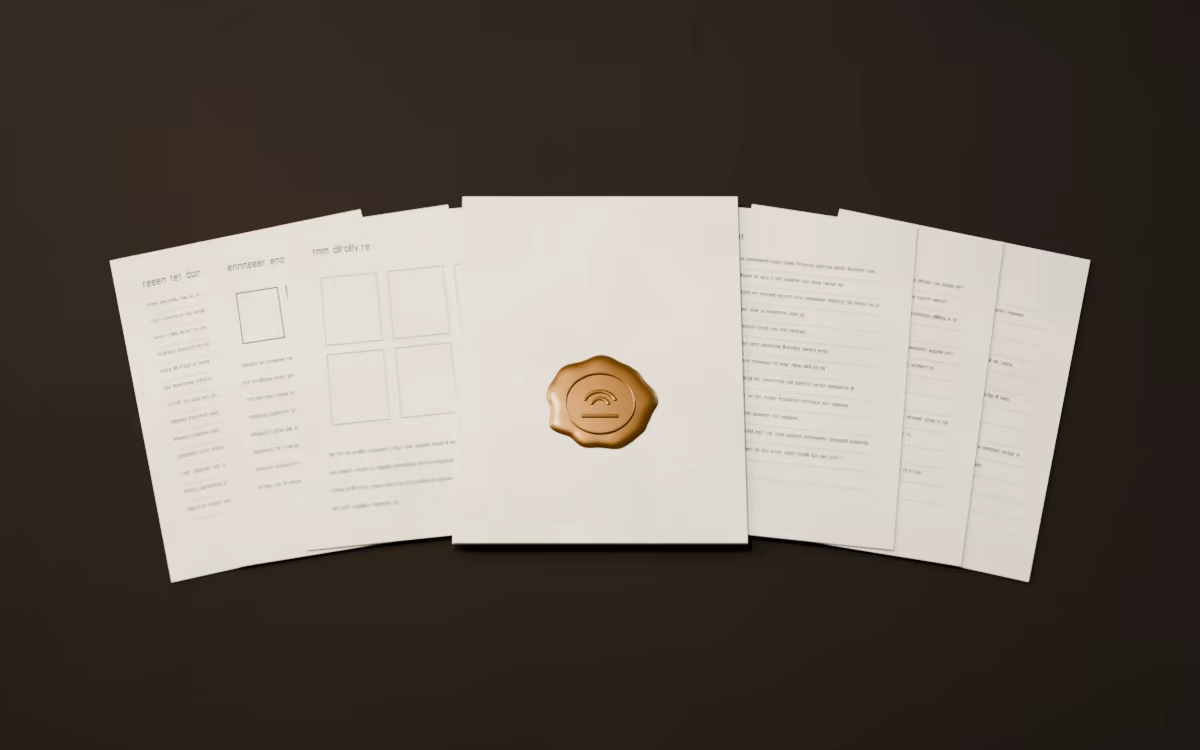
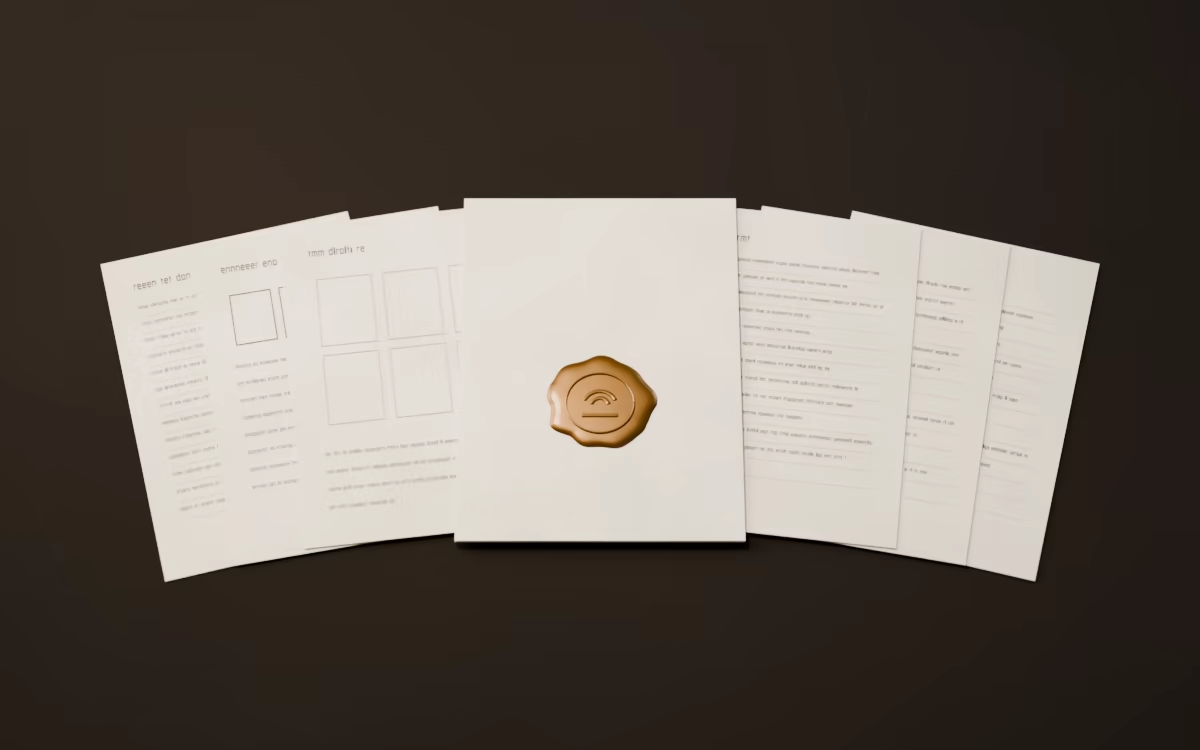
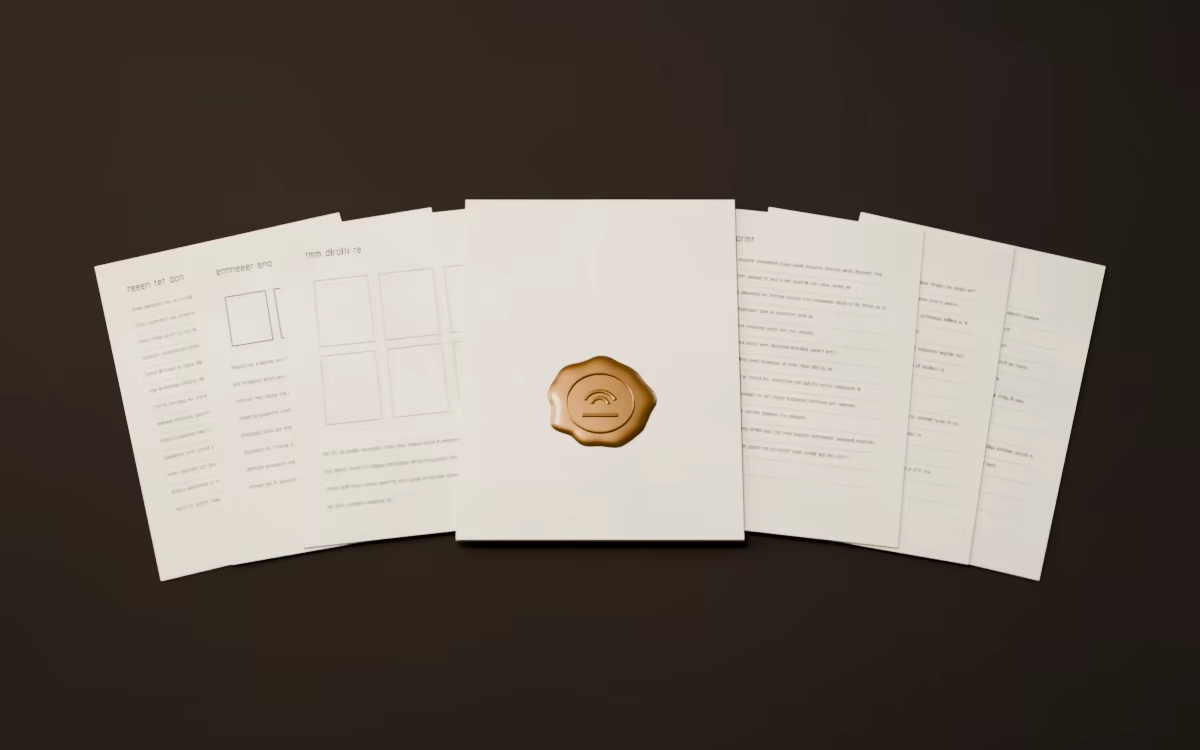
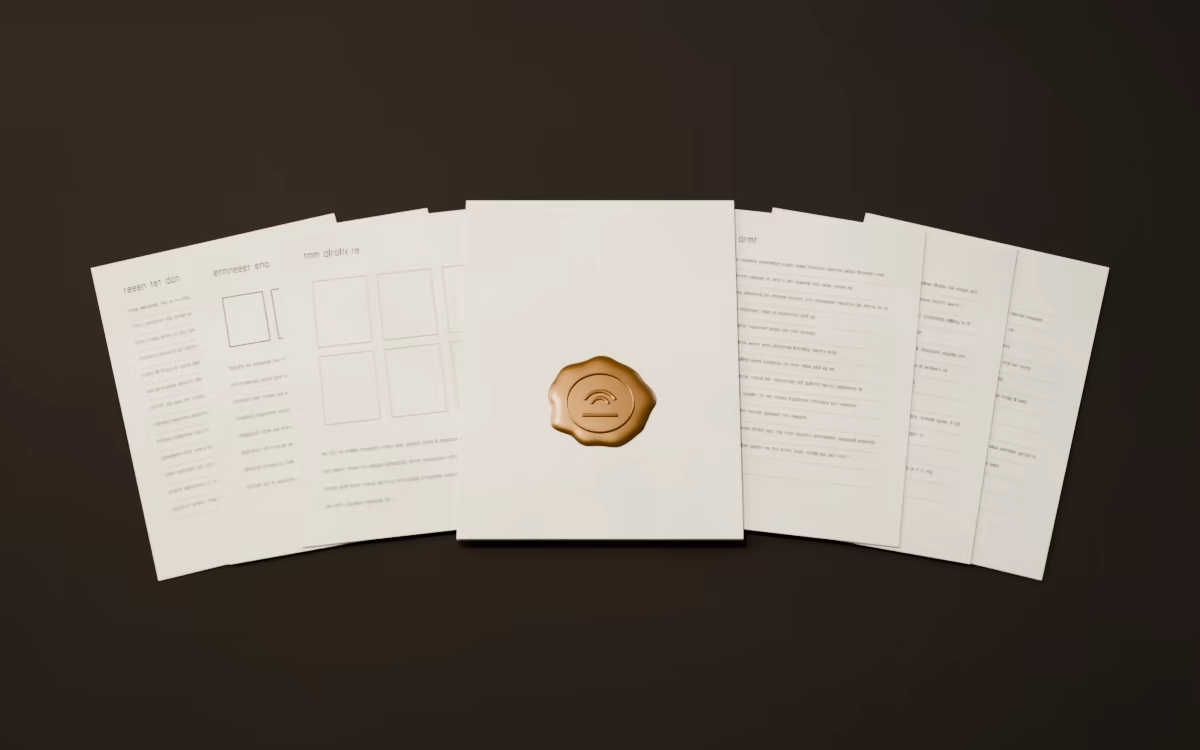
CUSTOS BLUEPRINT, noun. A sealed design for your application: every screen, every state, every decision, on the record and owned by you before a line is built.
Most software projects fail in the first conversation, not the last sprint. They start with a brief nobody interrogated, and everything after that is repair work. We start somewhere else: with a real interview.
Request an invitationWalk the process first
- A mutual agreement before any question
- You own the design either way
- A person reads every packet
The deck is not the product.
Studios sell you a promise. You pay, and then you find out what you bought.
The idea you described in the pitch is now something someone else has heard, and nothing you were shown is yours to take anywhere.
Most software projects fail in the first conversation rather than the last sprint. A brief nobody interrogated is a brief that everything after it is repair work for.
The record4/34
- venture.nameHarbour Books
- venture.one_linerA members-only ordering desk for independent bookshops.
- venture.backendNo, there is nothing running yet
- users.rolesrecorded as undecided
How it starts
Sign the mutual non-disclosure agreement
Before a single substantive question. It runs both ways, and nothing about your venture is asked until it is in place.
Sit the interview and seal your answers
One question at a time, in a deliberate order. Where an answer is too vague to build from, you get a better question there and then. Everything you said is yours to edit until you seal it.
Receive your Custos Blueprint, then decide
Build it with this studio, or take it anywhere. Both were always going to be true, which is what makes the first decision a small one.
Three things that are structurally true here
- Nothing is asked before the sealThe form in front of the agreement takes a name and an address and has no field for your venture. There is nowhere to type your idea, because the agreement that exists to protect it has not been signed yet.
- You own the design either wayThe edition you receive carries your design and nothing about how this studio works. A scan refuses to release one that would carry the second thing, so this is a rule a machine holds rather than a promise a person makes.
- Every decision is on the recordWhat you could not decide is written down as undecided. It is never quietly assumed on your behalf, and you can read back every fork you were offered and the reasoning you were given for the recommendation.
The chain of custody
We build it before you buy it.
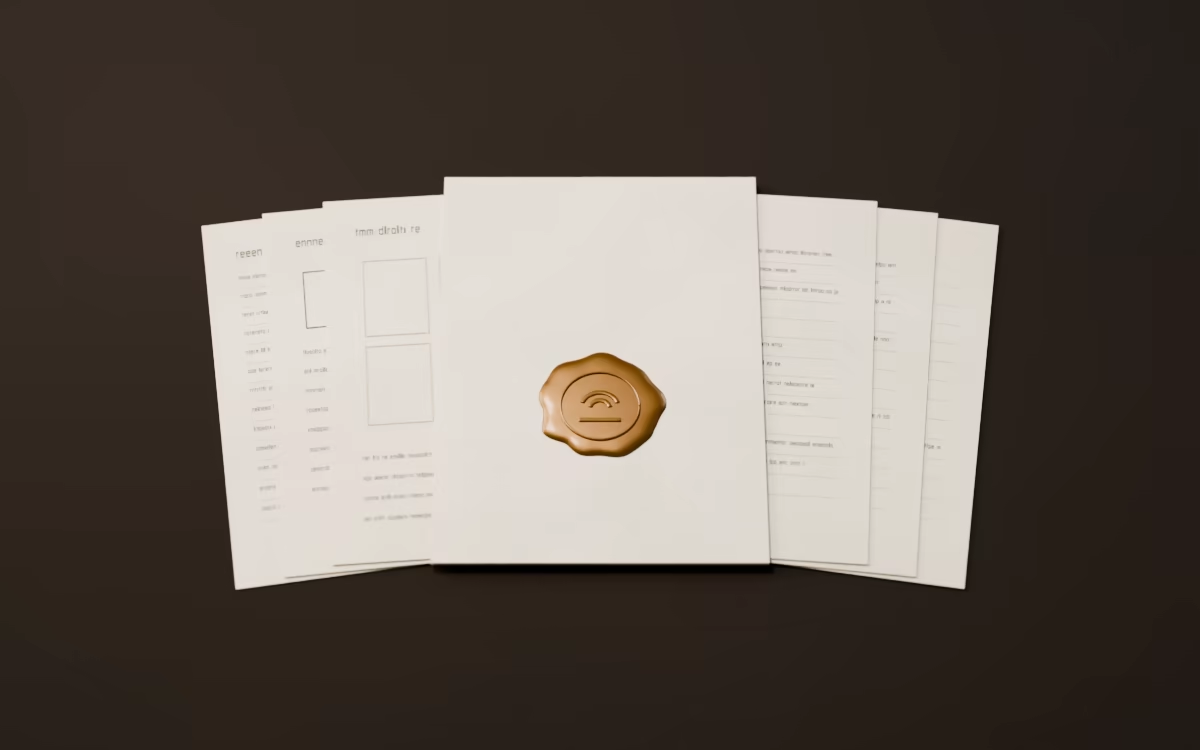
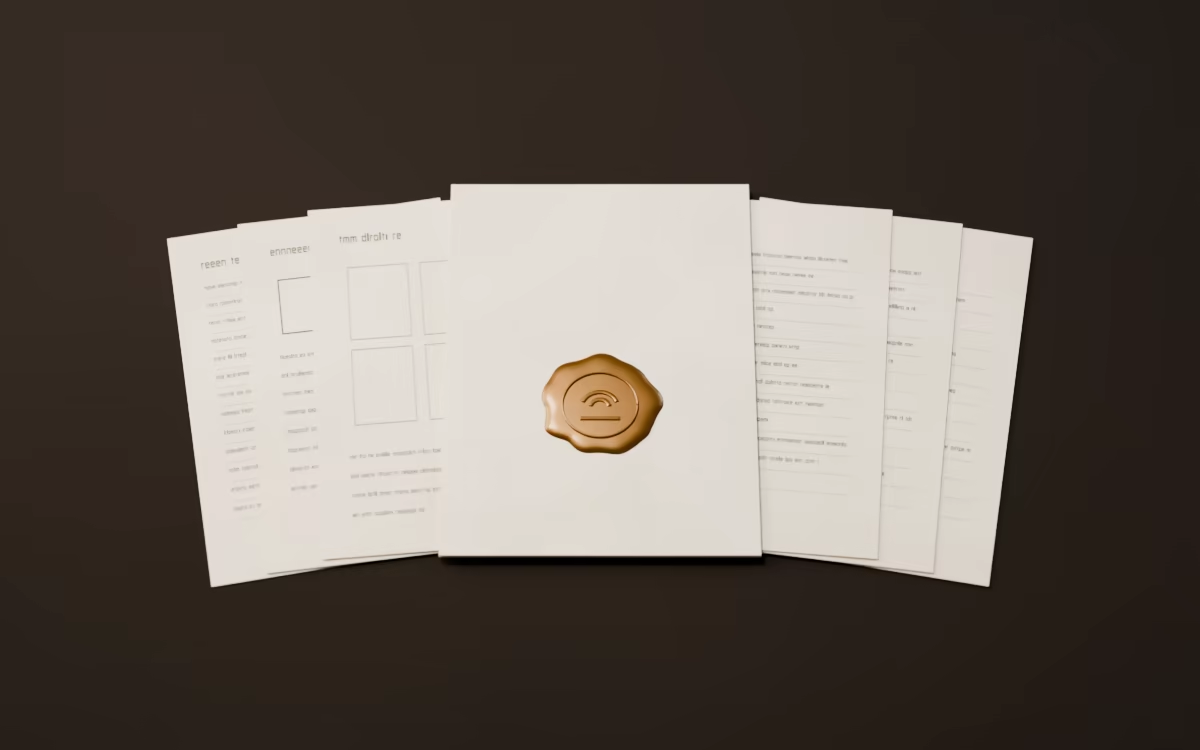
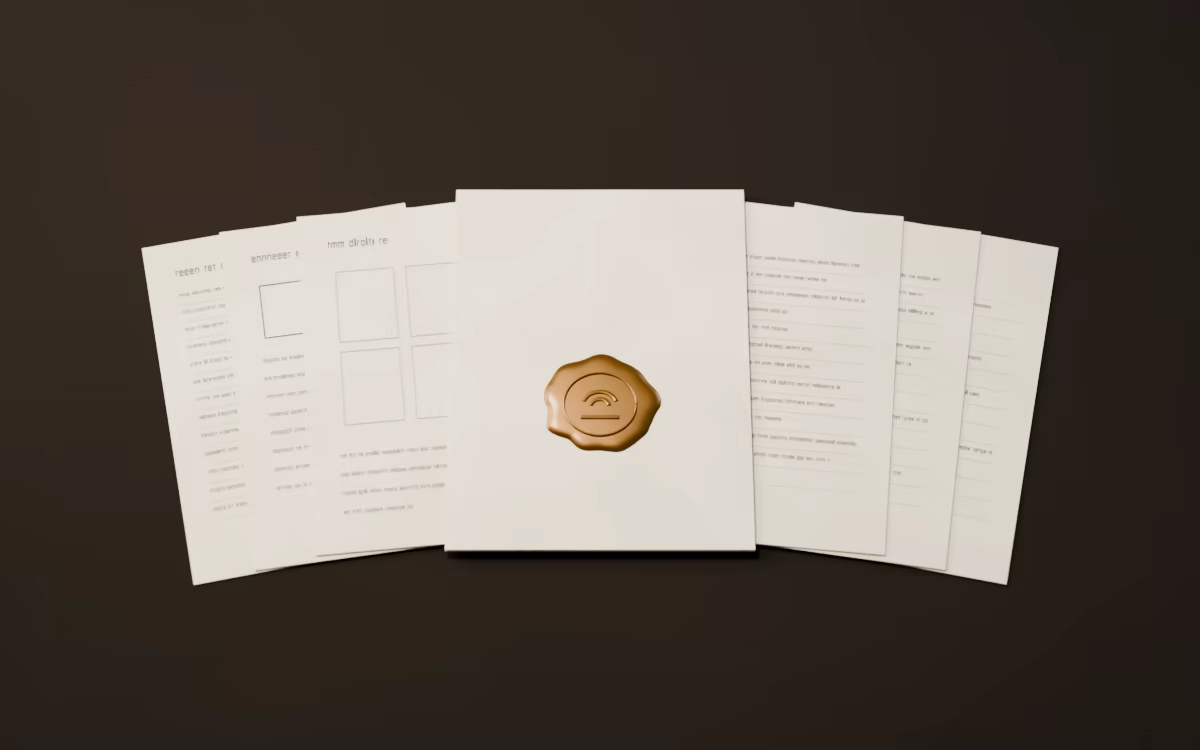
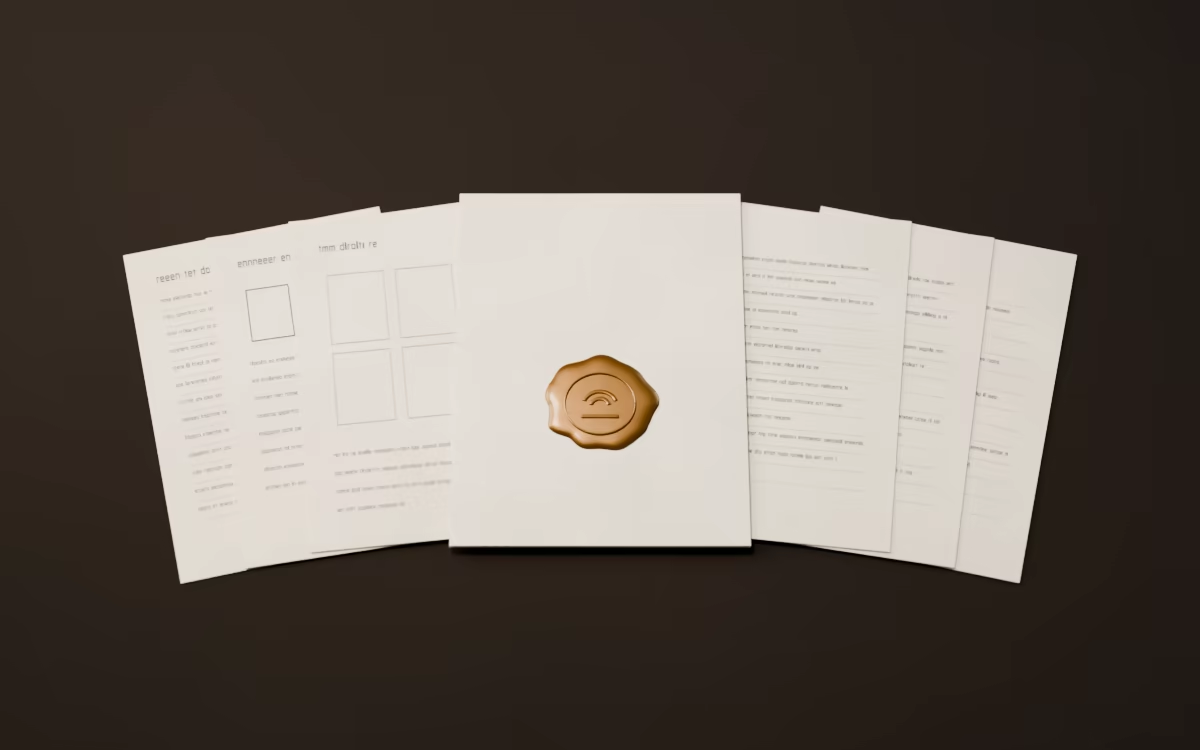
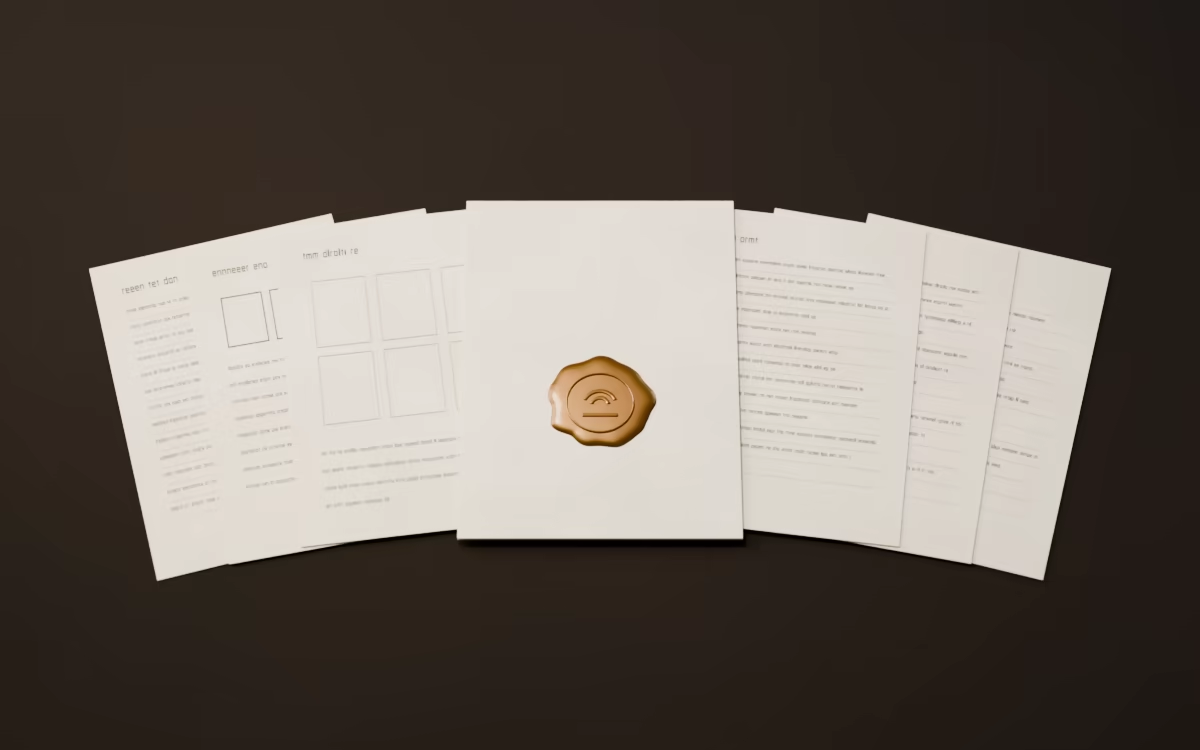
Four stations, in order, and each one leaves something behind. The paper trail is not a report written about the work afterwards. It is the work.






















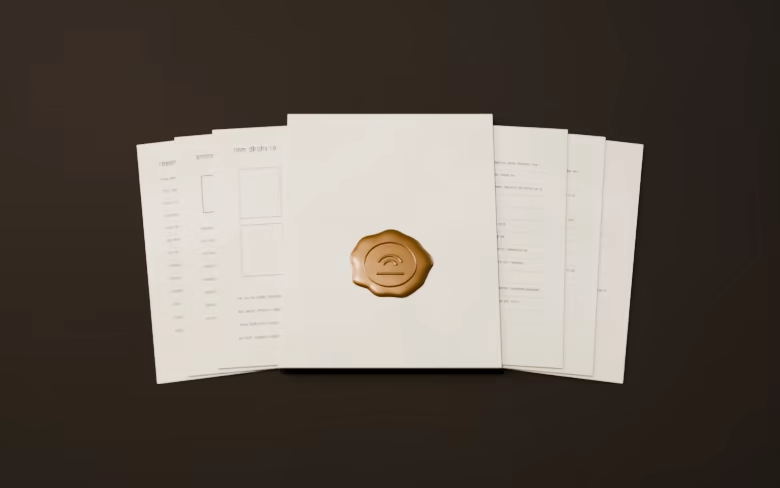
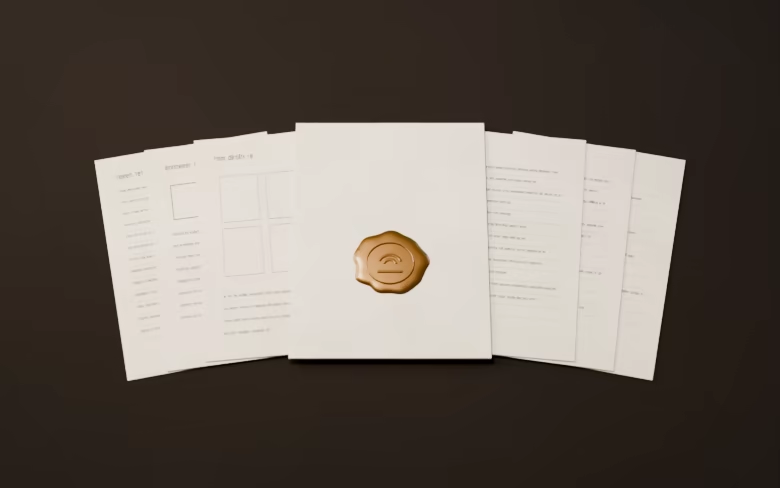
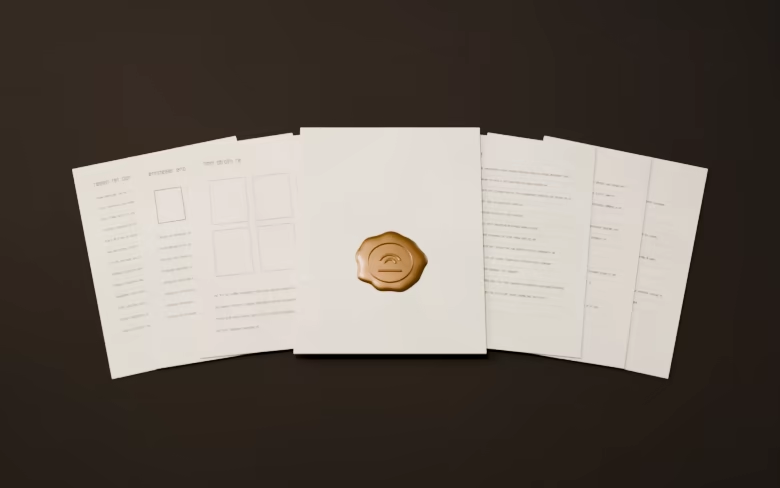
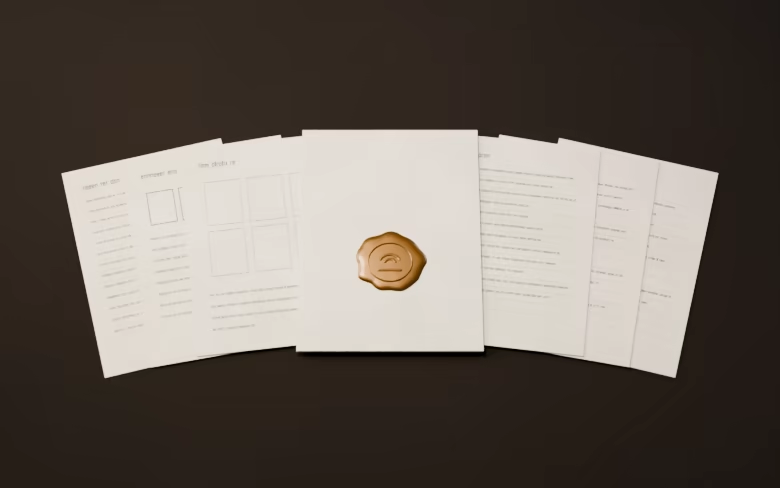
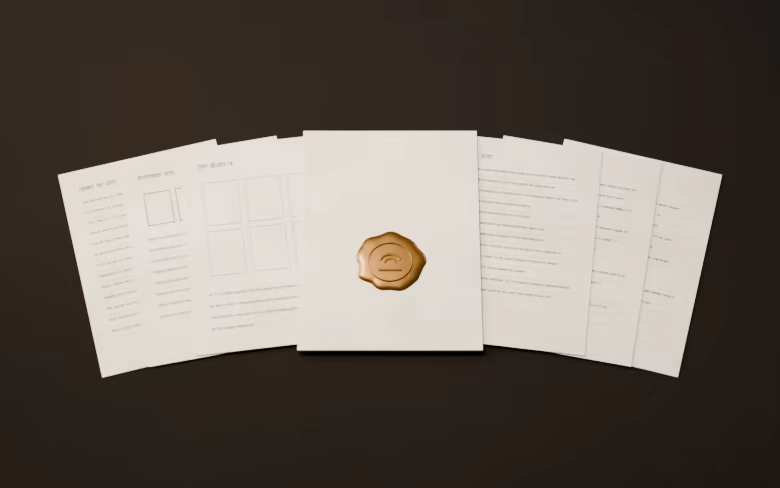
Your answers land in the record as you give them
You seal it. Nothing changes after that without you
A design you own, whoever builds it
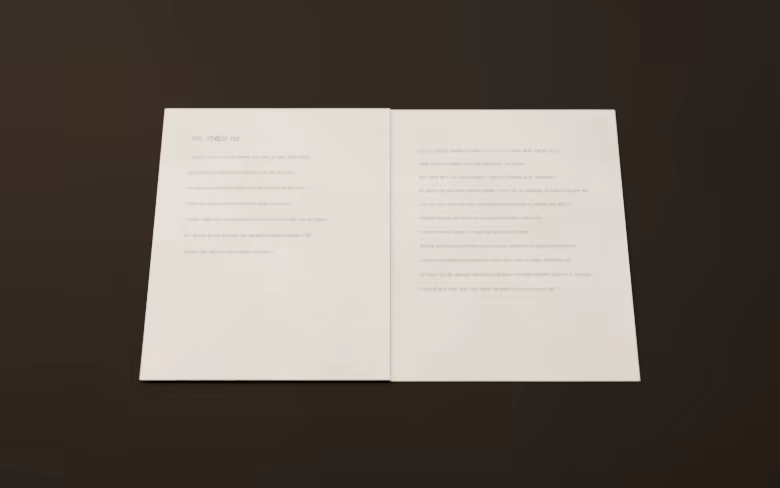
Your answers land in the record as you give them

You seal it. Nothing changes after that without you
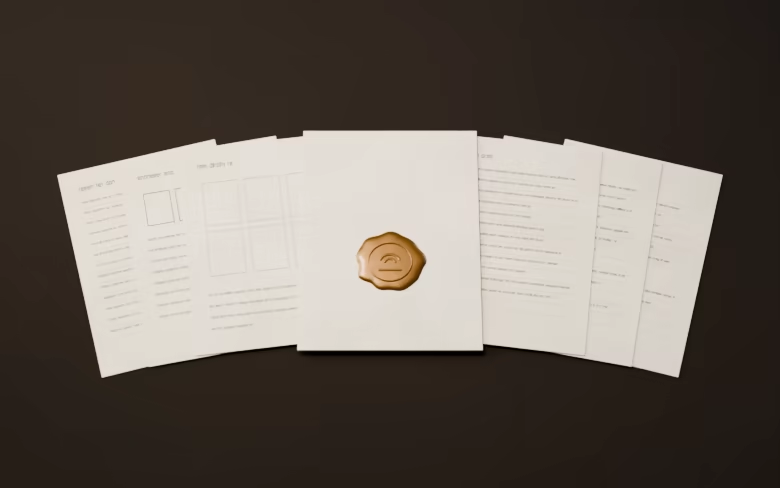
A design you own, whoever builds it
The agreement
Mutual, and first. It covers what you tell us about your concept and what we show you about how we work. The exact text you accept is fingerprinted and stored with the moment you accepted it.
- The text you agreed to, as it was on the day
- Your name, and the moment
- Nothing about your venture, because nothing about it has been asked yet
The interview
One question at a time, in a deliberate order, adapting to what you have already said. Where an answer is too vague to build from, you are asked a better one there and then rather than in a follow-up long after it would have helped.
- Your answers, in your own words, encrypted before they are written down
- Every fork you were offered, with the recommendation and its reasoning
- What you could not decide, recorded as undecided
The seal
You read everything back and change anything that is wrong. Sealing fingerprints the exact text. After that a change is a re-issue with its own record, never a quiet edit.
- One document with its own identifier and its own digest
- A record that cannot be altered behind you
- The point after which nothing moves without you
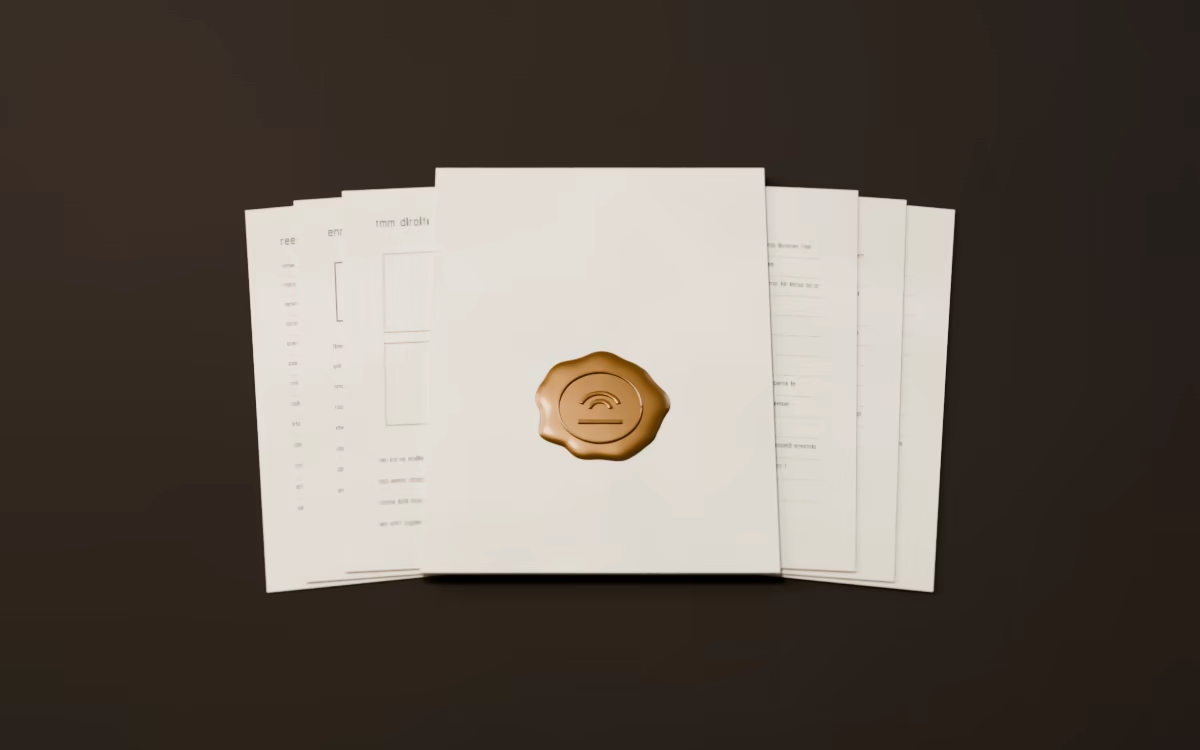
The packet
Your design, sealed and yours: the brief, the screens by state, the data model, the visual language, the build plan and the decision record. It is a specification any developer can be handed.
- Six artifacts, and every one of them yours
- Nothing about this studio inside it
- A dated chapter in the public record saying it was sealed
What is actually in it
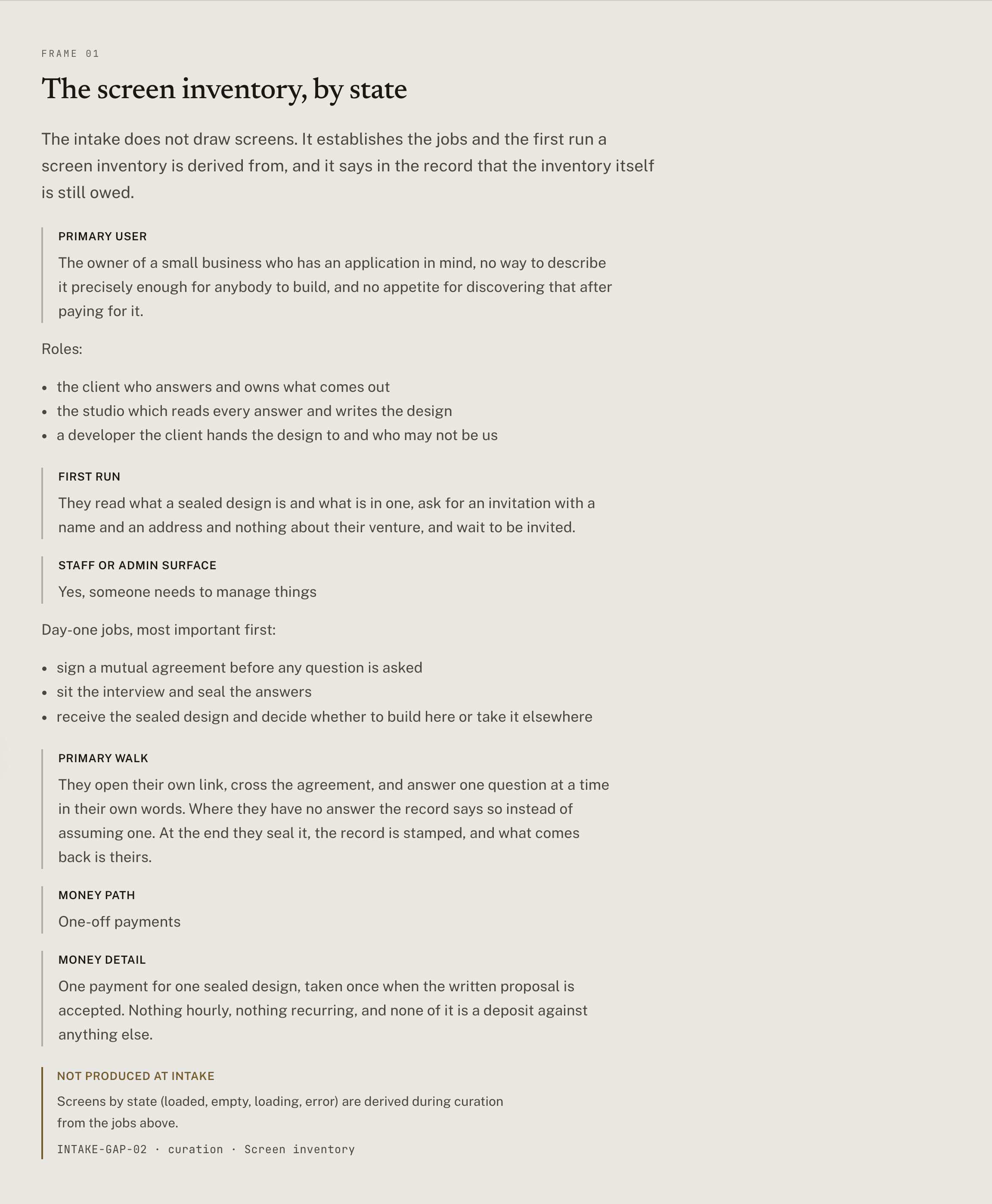
Every screen, every state
Not a list of features. Every screen the application has, and for each one what it looks like loaded, empty, still loading, and when something has gone wrong. The states are where software is actually finished or not.
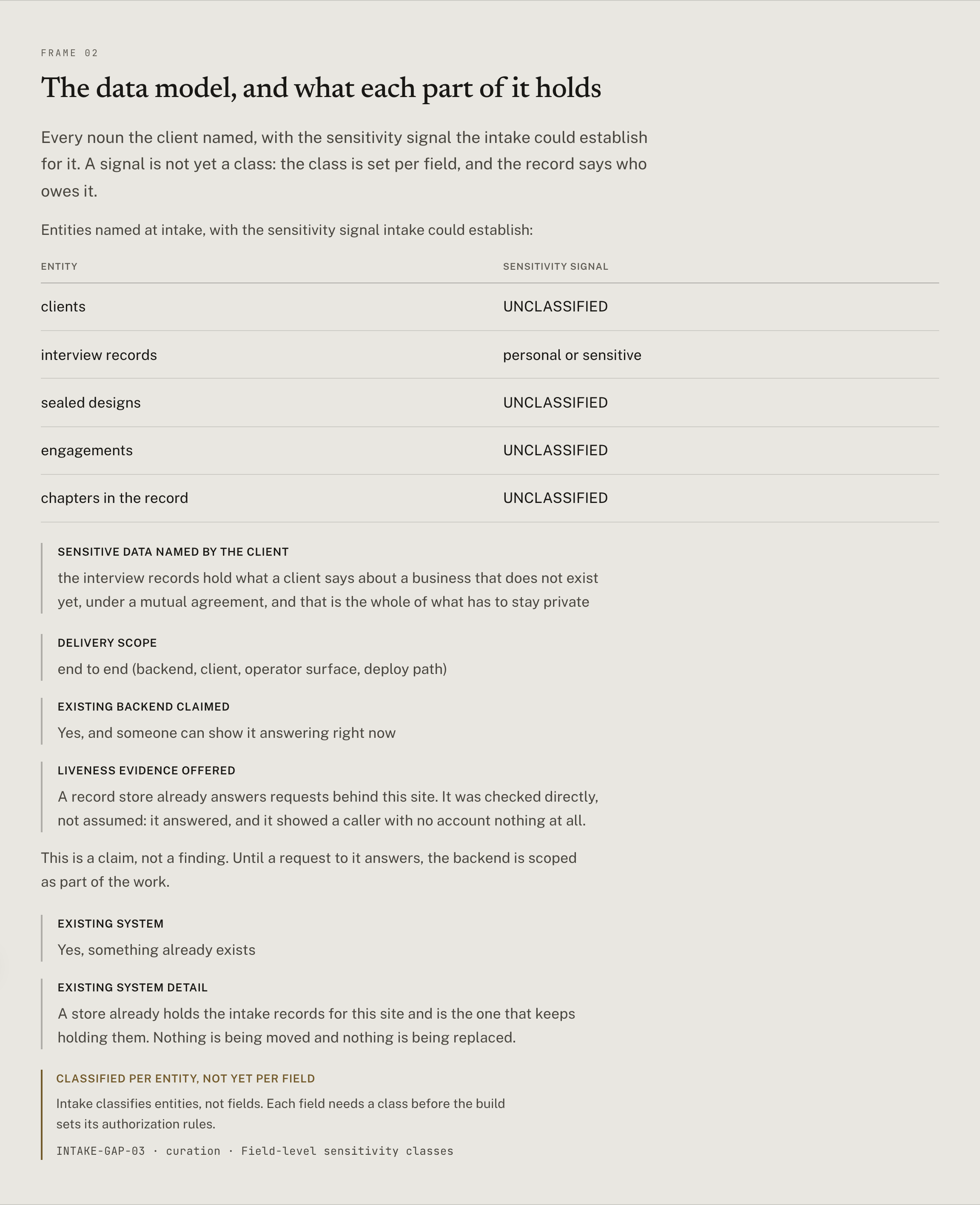
Your data, classified
Every field the application stores, what it holds, and how sensitive it is. The classification is what decides who may read a row, and deciding it on the page is cheaper than deciding it after the first person has been let in.
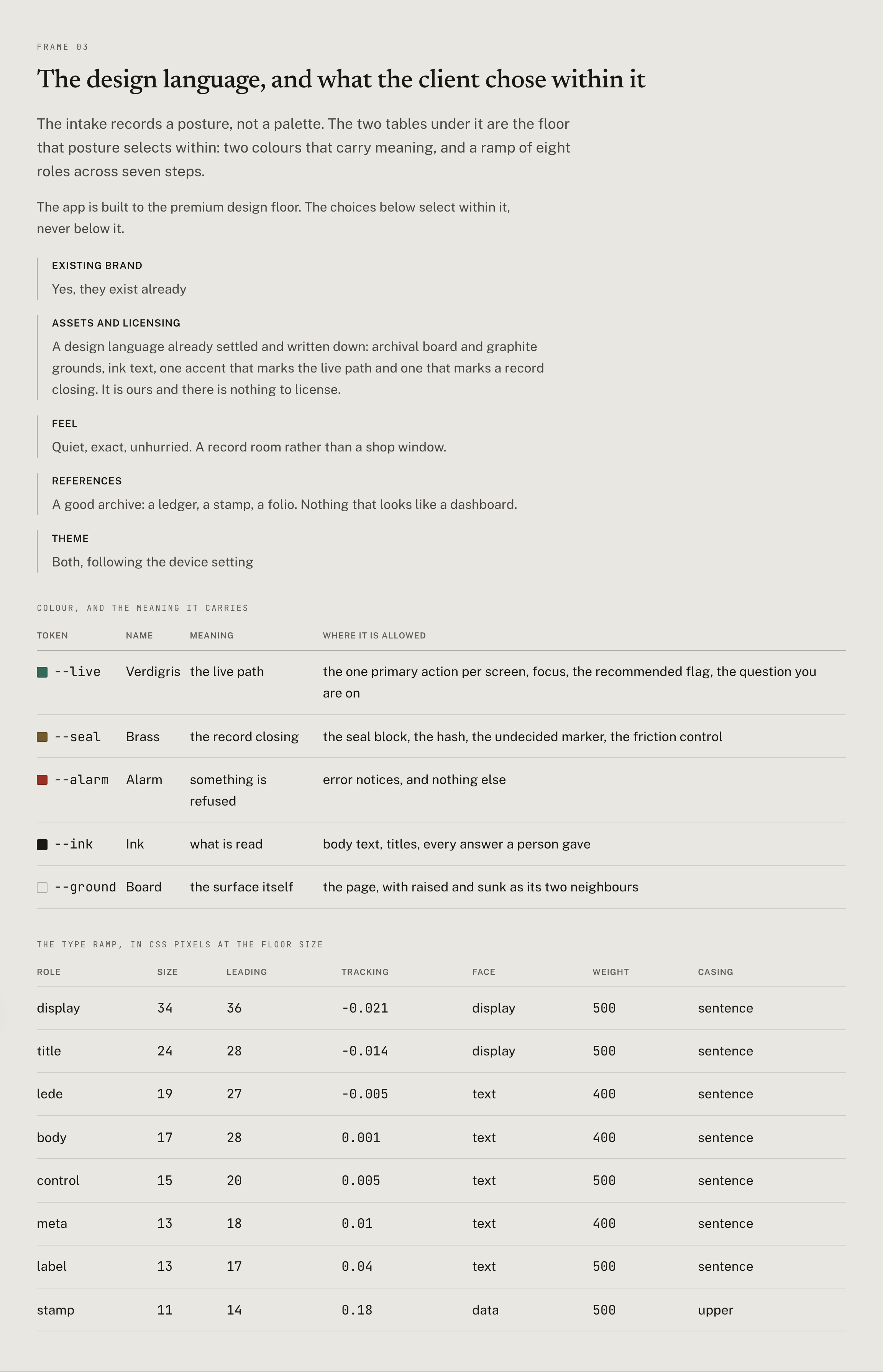
Your app’s own visual law
A palette where every colour has a meaning written beside it, a type ramp anchored to the reader’s own text size, spacing, corners, and the list of things this design will not do. Portable to any team.
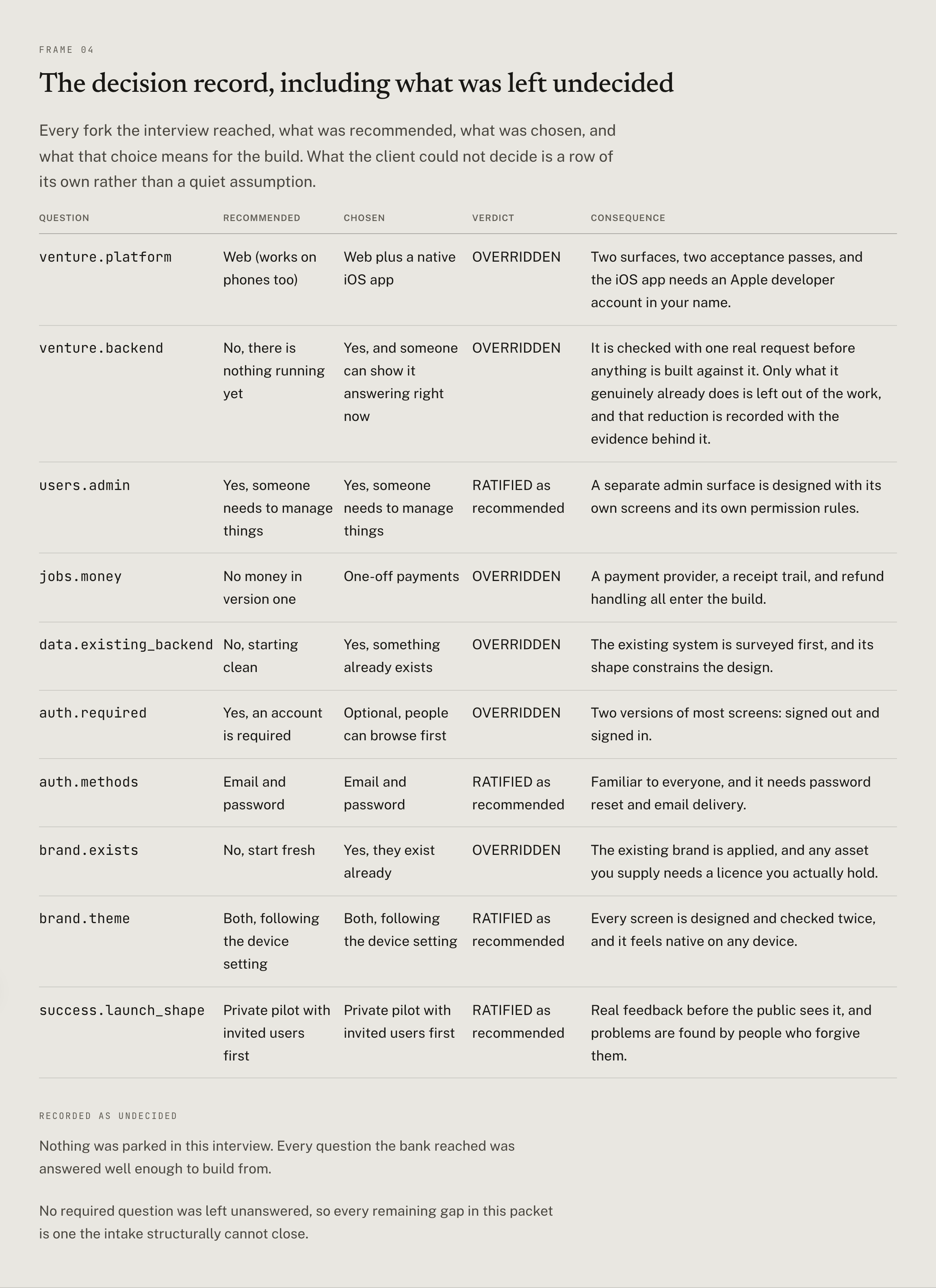
Every fork, recorded
What you were asked, what you answered, which way each decision went and why, and what was left open. When something turns out wrong later there is a document to argue with instead of two memories.
Counted, not claimed
Every number here is read from the records that produce it when this page is built, and stamped with when it was taken.
What clients say
No client has said anything yet. The first chapter that quotes one will be verbatim and named, and until then this space says so rather than borrowing somebody else’s words.
The questions a real buyer asks
What if I already have a developer?
Then hand them the packet. It is a specification written to be built from, and it is yours whoever builds it. A developer who is given every screen, every state, the data model and the acceptance conditions is being handed the part of the job that usually goes wrong.
What if I decide not to build?
You keep everything. That is the point of selling the design rather than a deposit on a build. The specification has value standing on its own, and it goes with you whether or not anything is built here.
Is my idea safe?
The agreement is signed before the first substantive question, and it runs both ways. Your answers are encrypted before they are stored, under a key that is not kept with the data. There is no analytics tracker and no session recording on this site, and you can ask for everything to be deleted at any time.
How long does it take?
Not answered on this page, deliberately. It depends on how much application there turns out to be, and that is what the interview is for. You get a real answer in writing, from a person, once there is something real to answer about.
What does it cost?
Also not answered here, and for the same reason. A figure invented before the work is understood is worth less than no figure at all. You get a real one, in writing, after the interview is read.
Do you host it?
No. Running software for other people is a commitment with an availability promise inside it, and this studio is one person, so making that promise would be making one it could not keep. You get the source, the accounts and the keys in your own name, and somewhere to run it that you control.
What we will not tell you here
Nothing on this page quotes you, schedules you, or promises you a delivery. None of that can be known before the interview, and a number invented before the work is understood is worth less than no number. You will get real answers, in writing, from a person, once there is something real to answer about.
Three ways in
You do not have to be ready to sign to find out whether this is for you.
The agreement is in review with counsel and is not ready to be signed by anyone. Rather than open the interview without it, or ask you to accept something a lawyer has not approved, this door is closed and says so. Leave your details and it becomes your intake the day it opens.
Read the process
The whole thing, station by station, with nothing gated. If it is not how you want your project run, you will know before you have told anyone anything.
Answer the first question
This is the real first question of the real interview, shown here as it is asked. Reading it is free and nothing is recorded, because you have not signed anything.
What is the working name of the app?
Sign and begin
The agreement, then the interview, then your sealed design. This is the door that leads to the thing itself.
Ask to be invited
Intakes open one at a time. Leave a name and an address and nothing else, because the one thing the agreement exists to protect is the one thing that is not taken before it is signed.
Walk in with an idea. Walk out with a sealed design you own.
The agreement comes before the first question.